Privacy for Parents: The 2026 Guide to 'Sharenting' and Facial Recognition (Or How to Disappear Your Child's Digital Footprint Before AI Weaponizes It)
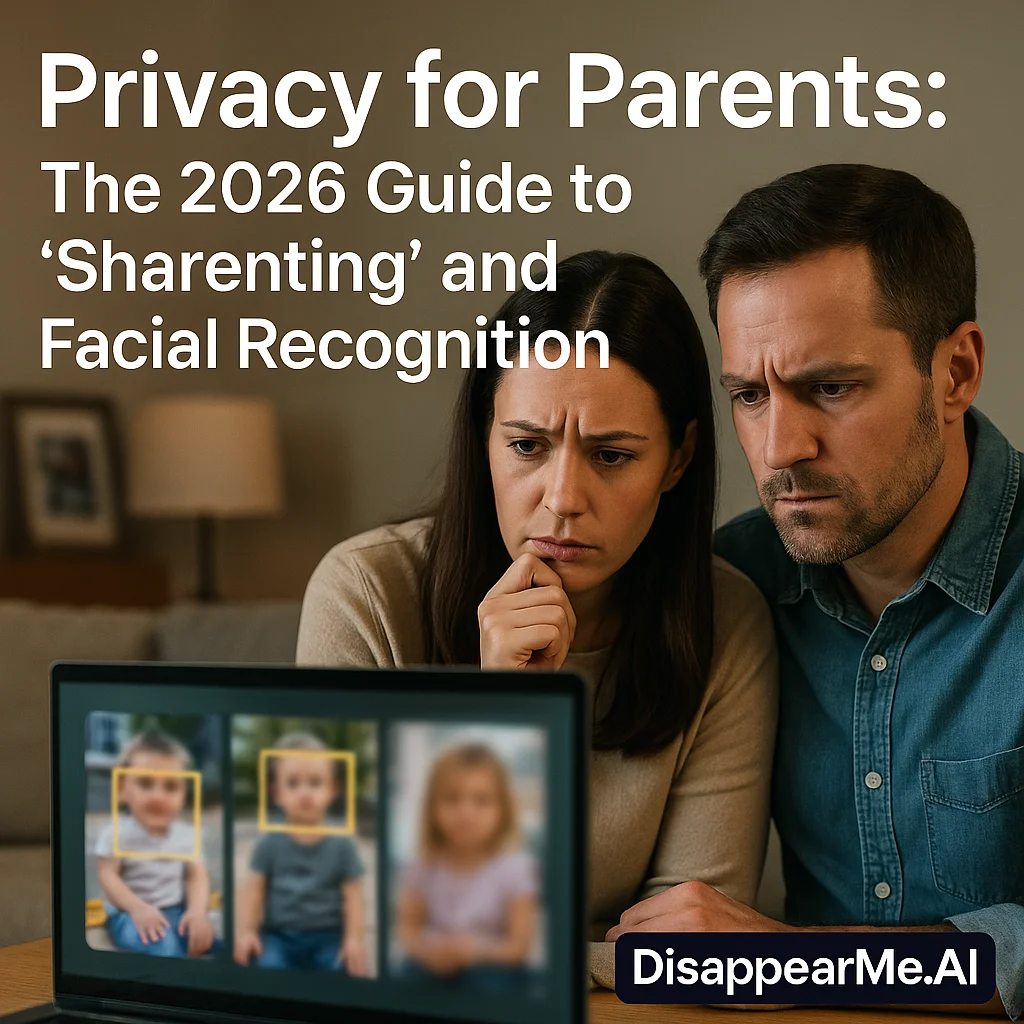
In November 2025, France's data protection agency CNIL published a stark warning to parents: the development of AI systems facilitates the creation of deepfakes, allowing manipulated photographs of minors published on social networks to be turned into nude pictures. The images are generated from various children's content—including fully dressed photos—available online. The Associated Press confirmed what parents feared most: individuals are using AI image generators to create inappropriate and explicit content involving children and teens, with the original images coming from everyday, innocent photos shared on social media.
<!-- seo-engine:intro-bridge:start -->If you want companion reads while you work through this topic, start with Children's Digital Footprint & Sharenting: Your Kid's Childhood Is a Permanent Data Record (And How to Protect It) and Phone Number Privacy Apocalypse: How Your Number Is Being Scraped, Sold, and Weaponized (And How to Disappear). If you want a done-for-you plan, book a free exposure audit.
<!-- seo-engine:intro-bridge:end -->The same month, the National Center for Missing and Exploited Children released statistics that should terrify every parent: in 2023 alone, their CyberTipline received 4,700 reports related to child sexual abuse material (CSAM) that involved generative AI technology. This represents a 35% increase from the previous year, with their system receiving 29.3 million reports total. Your child's kindergarten photo, their swimming lesson video, their birthday party snapshot—any of these can become source material for AI systems creating synthetic abuse imagery.
This isn't theoretical risk. In multiple documented cases in 2024-2025, high school students used publicly available photos of classmates to generate deepfake nudes that were distributed throughout their schools. FBI warnings were issued. Arrests were made. Lives were shattered. The perpetrators used tools freely available online, fed by photos parents innocently posted years earlier.
The phenomenon has a name: sharenting—parents sharing their children's information online. A 2018 UK study found that by age 13, parents have already posted an average of 1,300 photos of their child on social networks. That number is almost certainly higher now, seven years later. Those photos don't just exist in your Facebook memories. They're being scraped into facial recognition databases. They're training AI algorithms. They're indexed by companies like Clearview AI and PimEyes. They're available to anyone with basic internet skills and malicious intent.
Worse: by 2030, experts estimate sharenting could lead to $709 million in annual damages as a result of up to 7.4 million instances of online identity fraud. Your child's digital dossier—created by you, before they could consent—is building a comprehensive profile that will follow them into adulthood, affecting college admissions, employment, insurance rates, and romantic relationships. Photos you posted when they were three will be discoverable when they're twenty-three, thirty-three, forty-three.
This guide addresses the question parents are increasingly asking in 2026: How do I disappear my child's digital footprint before they turn 18? How do I remove child photos from internet facial recognition databases? How do I protect them from AI deepfakes when I've already posted hundreds of images? And most urgently: is it already too late?
Emergency Doxxing Situation?
Don't wait. Contact DisappearMe.AI now for immediate response.
Call: (646) 484-9051
Email: oliver@disappearme.ai
Our team responds within hours to active doxxing threats.
The Sharenting Crisis: Understanding What You've Actually Done
Before you can disappear your child's digital footprint, you need to understand the full scope of what sharenting has created. This isn't about guilt—it's about clarity.
The Average Child's Digital Footprint by Age Milestones
Research reveals the progression of children's digital exposure:
Birth to Age 2: Over 92% of 2-year-olds and 80% of infants in the United States already have an online identity. Parents post ultrasound images before birth, birth announcements with full names and birthdates, hospital photos including medical details, and "firsts" (first smile, first steps, first words) documenting developmental milestones with timestamps and locations.
Ages 3-5: By age 5, many children have nearly 1,000 photos of themselves online, accumulated through daily documentation of preschool activities, playground visits with location tags, birthday parties with friend lists visible, potty training milestones and bath time photos, and Halloween costumes, Christmas mornings, and vacation photos all tagged with locations and dates.
Ages 6-12: During elementary school years, exposure multiplies exponentially through school photos posted by institutions and parents, sports team photos with uniforms showing school names, recital and performance videos, report card screenshots with grades visible, sleepovers and playdates documenting friend networks, and "back to school" photos revealing routines and locations.
Age 13: By age 13, the average child has approximately 1,300 photos and videos of themselves posted by parents, plus whatever the child has begun posting on their own social media accounts. This represents a comprehensive visual and biographical record covering their entire childhood—without their consent.
The critical vulnerability: none of these children understood that these images would be permanent, searchable, and increasingly vulnerable to AI manipulation as technology advances.
What Actually Happens to Photos You Post
When you post a photo of your child, you're not simply sharing a moment with family and friends. You're engaging in a data transaction with profound and permanent consequences.
Social Media Platforms Claim Rights to Your Content - When you post to Facebook, Instagram, TikTok, or other platforms, you grant these companies nonexclusive rights to use your child's image and information. Meta (Facebook and Instagram's parent company) monetizes data by using it to program advertising and train algorithms, including facial recognition systems. Your child's face becomes training data for AI systems without your explicit knowledge or consent.
Photos End Up in Facial Recognition Databases - Researchers have documented cases where innocent preschool and toddler photos ended up training facial recognition systems without parents' knowledge. Companies like Clearview AI scrape billions of images from social media to build facial recognition databases sold to law enforcement and private entities. Your sweet kindergarten photo helps create a database your child never asked to join.
Images Are Repurposed Without Permission - Parents discover their children's photos being used to promote summer camps they attended, appearing on strangers' Pinterest boards, featured on parenting blogs they never authorized, showing up in marketing materials for products they never endorsed, and worst of all, circulating on forums where predators collect images of children.
Metadata Reveals Dangerous Details - Photos contain metadata including precise GPS coordinates showing where your child lives, goes to school, or plays, timestamps establishing routines and schedules, device information linking images to specific accounts, and camera settings that can fingerprint which photos came from the same source. A seemingly harmless photo of your child standing in front of their school reveals the school name, surroundings, and potentially the route they take.
AI Systems Permanently Index Your Child - Every posted photo becomes part of permanent indexes that are crawled by search engines, archived in the Internet Archive's Wayback Machine, cached by multiple data aggregators, and replicated across content distribution networks worldwide. Even if you delete a photo from your account, it may persist in dozens of archived and cached versions.
The Five Categories of Harm Sharenting Creates
Understanding sharenting requires understanding the specific harms it creates for children.
Category 1: Identity Theft and Financial Fraud - Children's identities are extraordinarily valuable to criminals because they come with clean credit histories and won't be discovered until the child applies for their first credit card or student loan years later. When you post your child's name, birthdate, location, school information, and family details, you're providing the building blocks criminals need to open credit accounts, apply for government benefits, file fraudulent tax returns, and take out loans in your child's name. By 2030, sharenting is estimated to enable 7.4 million annual identity fraud incidents totaling $709 million in damages.
Category 2: Predator Targeting and Sexual Exploitation - Photos you post give predators detailed intelligence about your child including physical appearance and how they've changed over time, locations they frequent and routines they follow, friend networks and social connections, interests and activities that can be used for grooming conversations, and family dynamics revealing potential vulnerabilities. The National Center for Missing and Exploited Children reports that AI is now being used to create deepfake child sexual abuse material using innocent photos as source material.
Category 3: Bullying and Psychological Harm - Children are increasingly discovering that their most vulnerable or embarrassing moments were shared online by their parents without their consent. Research documents children asking parents to delete posts or entire accounts, finding childhood photos used as memes or mocked by strangers, experiencing anxiety around being watched or judged by invisible audiences, and suffering damage to self-image and confidence from public exposure of private moments. The trust relationship between parent and child is undermined when children realize their parents exposed them without permission.
Category 4: Loss of Autonomy and Identity Development - Sharenting creates public personas for children before they can form their own identities. Excessively sharented kids can have harder times building internal sense of self because they feel constrained by the public persona that already exists, created without their help. Teens report feeling conflicted, angry, or frustrated when parents project an image of their childhood that doesn't align with how they want to be seen online. The permanence and searchability of childhood content creates identity constraints that follow them into adulthood.
Category 5: Algorithmic Profiling and Future Discrimination - The comprehensive biographical and behavioral data created through sharenting feeds AI systems that create profiles predicting future behavior, academic performance, health risks, and social characteristics. These profiles can be used by colleges evaluating admissions, employers making hiring decisions, insurance companies setting rates, financial institutions assessing creditworthiness, and romantic partners researching backgrounds. Your child's digital dossier—created without their consent—shapes opportunities available to them as adults.
The AI Threat: How Facial Recognition and Deepfakes Changed Everything
What was merely concerning about sharenting in 2018 became existentially dangerous with the 2023-2025 explosion of generative AI and facial recognition technologies.
Facial Recognition Databases: Your Child Is Already In Them
If your child has photos online, they're already indexed in facial recognition databases maintained by multiple entities, and you likely have no idea which ones.
Clearview AI operates what may be the largest facial recognition database, with over 30 billion images scraped from social media, websites, and public sources. The company sells access to law enforcement and private clients. Your child's face is in this database if any photo of them exists online. PimEyes allows anyone to search for faces across billions of indexed images. You upload a photo, and it finds other photos of the same person across the internet. Over 200 accounts have been deactivated for inappropriate searches of children's faces—but countless more continue operating.
Social Media Platforms including Meta (Facebook/Instagram) and others use facial recognition to suggest photo tags, identify people in uploaded content, train AI recommendation algorithms, and potentially sell or share facial data with third parties. Your child's face is part of the training data for these systems.
School and Institution Databases - Many schools now use facial recognition for security, attendance tracking, and lunch payment systems. These biometric databases persist indefinitely and may be breached or sold.
Commercial Data Brokers - Companies like Acxiom and Epsilon aggregate photos from multiple sources and link them to comprehensive consumer profiles that include behavioral, demographic, and transactional data.
The critical problem: you cannot opt out of databases that scraped your child's photos years ago. The data is already collected, already replicated, already permanent.
Deepfakes and AI-Generated CSAM: The Newest Horror
The term "deepfake" originated on Reddit in 2017 with users swapping faces into explicit videos. What started as novelty quickly became weaponized against minors—sometimes by other minors who don't understand the impact.
How Deepfakes Target Children - Generative AI tools can take innocent photos—from social media, school yearbooks, or family photos—and manipulate them to create child sexual abuse material without ever meeting the child in person. These tools are widely available and increasingly sophisticated. Perpetrators use simple prompts to generate graphic sexual images of computer-generated children or to alter real children's photos into deepfake explicit content.
In documented 2024-2025 cases:
- High school students used classmates' Instagram photos to generate deepfake nudes distributed throughout schools
- Parents discovered their children's vacation photos manipulated into sexual content on dark web forums
- AI-generated CSAM was used to extort children and families for financial gain
- Perpetrators justified their behavior by claiming "I didn't hurt a real child" despite using real children's images as source material
The Legal and Psychological Impact - Creating or sharing AI-generated child sexual abuse material is illegal under federal U.S. law and many state laws. Arrests have been made. Criminal charges include distribution of deepfake nudes of minors. But the law hasn't kept pace with technology—many jurisdictions still lack explicit statutes addressing synthetic CSAM, and enforcement is inconsistent.
For children depicted in deepfakes and their families, the psychological impact is devastating. Even if no physical abuse occurred, the violation of seeing your child's image weaponized in this way is profound. The images circulate online indefinitely. Removal is nearly impossible. The trauma persists.
The Take It Down Problem: Why Removal Is Nearly Impossible
In 2023, the National Center for Missing and Exploited Children launched "Take It Down"—a tool allowing anyone to anonymously create a digital fingerprint ("hash") of explicit images and have them removed from participating platforms without uploading the actual images.
The participating platforms as of 2025: Meta's Facebook and Instagram, Yubo, OnlyFans, and Pornhub. That's it. If images are on other sites, or sent through encrypted platforms like WhatsApp, they won't be removed. If someone alters the image (cropping, adding emoji, turning it into a meme), it becomes a new image requiring a new hash. The coverage is minimal. The problem is massive.
Google allows minors to request removal of their photos from search results, but this only removes them from Google—not from the source websites hosting the images. You must still contact every website owner individually requesting removal, with no guarantee they'll comply.
The fundamental problem: once images are online, removal becomes a game of whack-a-mole across thousands of sites, caches, and archives. You cannot realistically remove every instance.
How to Disappear Your Child's Digital Footprint: The Complete Protocol
Given the scope of the problem, complete erasure is impossible. But substantial reduction is achievable—and essential. This protocol minimizes your child's exposure before AI systems further weaponize their digital footprint.
Phase 1: Immediate Freeze - Stop Creating New Exposure (Start Today)
The first step is stopping the bleeding. No new photos. No new information. Immediate freeze on sharenting.
Delete or Make Private All Social Media Accounts Featuring Your Child - Review every social media platform you use (Facebook, Instagram, TikTok, Twitter/X, Pinterest, LinkedIn, Snapchat, YouTube) and either delete all posts featuring your child or set accounts to maximum privacy with restricted friend lists. Download any photos you want to preserve personally before deletion, then permanently remove them from platforms.
Disable Facial Recognition on All Platforms - Facebook, Instagram, and other platforms offer facial recognition features that can be disabled. Navigate to privacy settings and turn off all automatic face recognition, photo tagging suggestions, and biometric data collection. Disable features that allow others to tag your child in photos.
Establish a Strict "No Posting" Policy Going Forward - Communicate to family members, friends, schools, sports teams, and any organization your child participates in that photos of your child may not be posted online without written permission. Make this a firm boundary. Many parents find it necessary to be explicit and even forceful about this rule.
Audit Smart Devices and Connected Toys - Smart speakers, video doorbells, baby monitors, and connected toys collect audio and video of children. Disable unnecessary features, restrict data sharing in privacy settings, and consider disconnecting devices that serve no essential purpose.
Phase 2: Google and Major Search Engine Removal
Removing your child's photos from Google search results is critical because Google is the primary entry point for discovering images online.
Use Google's Minor Image Removal Tool - Google allows minors (or parents acting on their behalf) to request removal of images from search results. Navigate to the Google support page for removing images of minors and fill out the removal request form. You'll need to provide:
- The name of the minor
- Your name (if requesting on their behalf)
- Search terms that surface the photos
- Screenshots of search results showing the images
- URL of the full search results page
- URL of the image itself (found by clicking the image, then copying the share URL)
Important Limitations - Google only removes images from search results, not from source websites. The photo remains on the original site; it just won't appear in Google searches. Google makes exceptions when images are newsworthy or matters of public interest. For people over 18, this removal process is not yet supported.
Repeat for Bing, Yahoo, and DuckDuckGo - These search engines have separate removal processes. Search for your child's name and variations, document every image found, and submit removal requests to each platform individually.
Monitor and Re-Request Quarterly - Search engines re-crawl websites and may re-index removed images. Quarterly monitoring and repeated removal requests are necessary to maintain disappeared status.
Phase 3: Social Media Platform-Specific Removal
Each social media platform has unique removal procedures that parents must navigate individually.
Facebook Image Removal - Facebook will only let parents request removal of content for minors under 13. If your child is 13-17, they must submit the request themselves. Fill out Facebook's reporting form for images of minors, providing links to specific photos and explaining why removal is requested. Facebook's community standards prioritize removal when images violate policies around child safety.
Instagram Image Removal - Instagram uses similar policies to Facebook. Report Instagram accounts that have shared photos of your child without permission using Instagram's reporting form. You don't need an Instagram account to complete the form, but you must provide links to the specific photos or videos you're reporting.
TikTok Video Removal - TikTok videos can be reported directly through the app by clicking the share arrow on the video, selecting "Report," and choosing the appropriate violation category. Alternatively, request TikTok remove videos of minors by submitting privacy violation reports through their online form.
YouTube Video Removal - First contact the person who posted the video requesting its removal. If they uploaded innocently, they may comply promptly. If they refuse or uploaded maliciously, use YouTube's Flag functionality and fill out a removal request form citing YouTube's community guidelines protecting minors.
Third-Party Posts by Schools, Organizations, and Others - Contact website administrators, school principals, sports league coordinators, and organization leaders requesting removal of your child's photos from their websites, newsletters, and social media accounts. Be prepared to cite child safety concerns and, if necessary, reference regulations like FERPA (Family Educational Rights and Privacy Act) requiring parental consent for publication of student information.
Phase 4: People-Search Sites and Data Broker Removal
Your child's information may appear in people-search databases and data broker systems even if you never directly posted to these sites. Removal is labor-intensive but essential.
Major People-Search Sites including Whitepages, Spokeo, BeenVerified, MyLife, Radaris, Intelius, and FastPeopleSearch aggregate information from public records, social media scraping, and data broker purchases. Each site has unique opt-out procedures typically involving:
- Searching the site for your child's name and confirming their profile exists
- Locating the opt-out page (often deliberately hard to find)
- Completing verification procedures proving identity
- Waiting for confirmation that the profile was removed (typically 7-30 days)
- Re-checking quarterly because profiles often reappear as databases refresh
Data Broker Removal - Larger data brokers like Acxiom, Experian Marketing, Epsilon, and Oracle maintain comprehensive profiles that feed people-search sites. Removing your child from these upstream sources prevents information from cascading to secondary databases. However, removal procedures are complex, time-consuming, and must be repeated quarterly.
The realistic time investment for manual removal: 10-20 minutes per data broker multiplied across 140+ major brokers equals 25-30 hours of work, repeated quarterly. For parents with multiple children, this becomes 60-120 hours annually—effectively impossible to maintain manually.
DisappearMe.AI Automated Child Protection - DisappearMe.AI offers family-specific removal services that automate continuous monitoring and removal across all major data brokers and people-search sites, specifically designed to protect children's information before they reach adulthood. The service monitors for re-population quarterly, automatically re-submits removal requests, documents all removal actions, and provides ongoing threat detection if your child's information appears in new databases.
Phase 5: Facial Recognition Database Removal
Removing your child from facial recognition databases is theoretically impossible because companies like Clearview AI don't offer opt-out mechanisms. However, minimizing their ongoing data collection is achievable.
Minimize Future Collection - By removing photos from social media, search engines, and public websites, you prevent facial recognition companies from scraping new images going forward. Existing images in their databases persist, but at least the database stops growing.
Monitor PimEyes and Similar Services - While you cannot remove your child from PimEyes, you can monitor whether their photos appear in searches. Periodically search for your child's face and document which websites are hosting their photos, then request removal from those source sites.
Advocate for Regulatory Protection - Support legislation like the proposed Illinois Biometric Information Privacy Act expansions and similar state laws that would require explicit opt-in consent before children's biometric data (including facial recognition data) can be collected or stored.
Phase 6: School and Institution Privacy Enforcement
Schools, daycare facilities, sports leagues, and other organizations frequently photograph children and post images online without meaningful parental consent.
Review and Opt Out of Photo Permissions - Most schools request photo release permissions at enrollment. If you previously granted permission, formally revoke it in writing citing child safety concerns and requesting removal of all existing photos featuring your child from school websites, social media accounts, newsletters, and promotional materials.
Invoke FERPA (Family Educational Rights and Privacy Act) - FERPA gives parents rights to control the disclosure of their child's education records, including photographs in some contexts. While directory information (name, grade level, participation in activities) is often exempt, you can formally request that your child's information not be released without prior written consent.
Demand Secure Platforms - Many schools use platforms like ClassDojo, Seesaw, or Google Classroom that encourage photo sharing. Request that schools use privacy-respecting alternatives or at minimum ensure that photos are not publicly accessible and are not fed into AI training systems.
Document Everything - Keep written records of all opt-out requests, responses from institutions, and confirmations that photos were removed. This documentation is essential if you later need to escalate to school board complaints or legal action.
Phase 7: Prepare Your Child for Digital Autonomy at Age 13
As your child approaches the age when they can create their own social media accounts, preparing them for responsible digital citizenship is essential.
Digital Footprint Education - Teach your child that their digital footprint is permanent and searchable, that what they post can affect college admissions, employment, and relationships, that privacy settings can change or fail, and that "friends" online may not be trustworthy.
Consent and Autonomy - Give your child increasing control over their digital presence. Starting around age 10-11, let them decide which family photos can be shared, allow them to review and approve before you post anything featuring them, and respect their wishes when they ask for content to be removed.
Privacy by Design - Help them create accounts with privacy-focused settings from day one including using pseudonyms or variations of their name rather than full legal names, setting accounts to private/friends-only rather than public, disabling location tagging and metadata on photos, avoiding apps that require excessive permissions, and using separate email addresses for different purposes.
Prepare for Resistance - Many parents report that their pre-teens and teenagers are more privacy-conscious than they are. Listen when your child expresses discomfort about being posted online. Their instincts about protecting their privacy are often correct and should be respected.
Turn Chaos Into Certainty in 14 Days
Get a custom doxxing-defense rollout with daily wins you can see.
- ✓✅ Day 1: Emergency exposure takedown and broker freeze
- ✓✅ Day 7: Social footprint locked down with clear SOPs
- ✓✅ Day 14: Ongoing monitoring + playbook for your team
Frequently Asked Questions
Q: Is it too late to disappear my child's digital footprint if I've already posted hundreds of photos?
It's not too late, but expectations must be realistic. You cannot erase every instance of photos already circulated online. However, you can substantially reduce your child's digital exposure by removing photos from major platforms (social media, Google search results), removing information from data brokers and people-search sites, stopping new photo sharing immediately, and monitoring continuously to prevent re-population. Think of it as reducing attack surface rather than achieving complete invisibility. Every photo removed is one less image available for facial recognition training, identity theft, or deepfake creation.
Q: How do I remove child photos from internet facial recognition databases specifically?
Direct removal from facial recognition databases like Clearview AI or PimEyes is generally impossible because these companies don't offer consumer opt-out mechanisms. However, you can minimize their data by removing photos from social media platforms where scraping occurs, removing images from Google and other search engines, contacting websites hosting your child's photos requesting removal, and preventing new photos from being posted that could be scraped. This stops feeding new data to facial recognition systems, though existing data persists indefinitely.
Q: My parents and in-laws keep posting photos of my kids despite my requests to stop. What do I do?
This requires firm boundaries and consequences. First, have a direct conversation explaining specific dangers including identity theft, facial recognition databases, AI deepfakes, and predator targeting. If they dismiss your concerns, send written documentation (articles, FBI warnings, statistics) making the risks undeniable. If they still refuse to comply, implement consequences: reduce or supervise visits where photos might be taken, withhold photos you take so they have nothing to post, report their posts to platforms as unauthorized images of minors, and if necessary, reduce contact until they respect your boundaries. Your child's safety takes precedence over family members' social media habits.
Q: Can AI really generate child sexual abuse material from innocent photos I posted?
Yes. The technology exists, is widely accessible, and is being used right now. Generative AI tools can take fully-clothed photos of children and manipulate them into explicit sexual content. The National Center for Missing and Exploited Children received 4,700 reports of AI-generated CSAM in 2023 alone. Cases have been documented of high school students using classmates' social media photos to create deepfake nudes. The FBI has issued warnings. This is not hypothetical—it is happening to real children from photos their parents posted innocently.
Q: How do I explain to my child why I need to delete their childhood photos online?
Age-appropriate honesty is essential. For younger children (5-10), explain that photos online can be seen by people we don't know, that some people use photos in ways we don't like, and that we're keeping family photos private to keep them safe. For older children (11+), you can be more specific: explain facial recognition databases, identity theft risks, the permanence of online content, and AI deepfake dangers. Most importantly, involve them in the decision. Many children report feeling relieved when their digital exposure is reduced.
Q: Will removing photos from Google remove them from the internet?
No. Google removal only removes images from Google search results. The photos remain on the original websites that host them. To actually remove photos from the internet, you must contact the owner of each website requesting deletion. This can involve social media platforms, news sites, blogs, school websites, organizational pages, and countless other sources. Complete removal requires addressing both search engines (so photos aren't discoverable) and source websites (so photos no longer exist online).
Q: What if my child's school refuses to remove photos from their website?
Escalate systematically. Start with a formal written request to the principal citing child safety concerns and referencing FERPA rights. If the principal refuses, escalate to the superintendent and school board. Document everything in writing. Consult with a privacy-focused attorney about whether the school's photo policies violate federal or state privacy laws. In some cases, media attention on privacy violations has forced schools to change policies. Be prepared to be persistent—many schools dismiss initial concerns until parents demonstrate they're serious.
Q: How does DisappearMe.AI protect children specifically?
DisappearMe.AI offers family-specific protection that automates the labor-intensive work of removing children's information from data brokers, people-search sites, and public databases before they reach adulthood. The service continuously monitors 140+ data brokers for your child's information, automatically submits removal requests when information appears, handles re-population by re-removing data quarterly, provides threat detection if your child's information appears in breach databases, and offers guidance on removing photos from social media and search engines. For parents with multiple children, this automation is the only realistic way to maintain disappeared status across all exposure vectors.
Q: My teenager wants to start posting on social media but I'm worried about privacy. What's the compromise?
Establish privacy-by-design principles from the beginning. Allow social media use only with private accounts (friends-only, not public), no location tagging or geotagging on any photos, pseudonyms or nickname variations rather than full legal names, separate email addresses specifically for social media accounts, and regular privacy audits where you review posts together. Most importantly, educate your teenager about permanence, about how colleges and employers search social media, about AI scraping and facial recognition, and about the long-term consequences of oversharing. Many teenagers are more privacy-conscious than their parents once they understand the risks.
Q: Is sharenting actually a form of child abuse or neglect?
Some researchers argue that sharenting can be considered a form of child abuse and neglect, particularly when it violates a child's privacy, exposes them to documented dangers, creates emotional distress from public sharing without consent, and undermines their autonomy and future control over their identity. However, most sharenting occurs with loving intent from parents who simply don't understand the risks. The key is that once educated about the dangers, continuing to overshare despite knowing the harms could constitute neglect. The goal should be education and harm reduction, not criminalizing well-meaning parents.
About DisappearMe.AI
DisappearMe.AI recognizes that protecting children in the digital age requires addressing threats parents didn't anticipate when they first started posting photos years ago. When most parents began sharing their children's images on social media, facial recognition databases didn't exist at scale, AI-generated deepfakes weren't technologically possible, and the concept of sharenting enabling 7.4 million annual identity fraud cases by 2030 seemed like science fiction.
Now, in 2026, the stakes are existentially different. Every photo parents posted innocently in 2015-2020 is now vulnerable to facial recognition scraping, AI manipulation, and identity theft. Children are discovering that their comprehensive digital dossiers—created without consent—are affecting their social relationships, mental health, and future opportunities.
DisappearMe.AI's family protection service is designed specifically to disappear children's digital footprints before they turn 18 and gain legal control over their data. The service automates the impossible: continuous monitoring and removal from 140+ data brokers, quarterly re-removal as databases refresh, coordination with search engines and social platforms, threat detection if information appears in new locations, and comprehensive documentation of all removal actions.
For parents who recognize they've created unintentional exposure, DisappearMe.AI provides the systematic solution necessary to substantially reduce their child's digital vulnerability before AI systems further weaponize that exposure. The goal isn't perfect disappearance—that's impossible once images are online. The goal is reducing attack surface dramatically, preventing facial recognition training on your child's images, blocking identity thieves from accessing comprehensive profiles, and minimizing material available for deepfake creation.
Most fundamentally, DisappearMe.AI helps parents give their children the gift they couldn't give themselves: the right to enter adulthood without a comprehensive digital dossier created without their consent, permanently searchable and vulnerable to exploitation.
Threat Simulation & Fix
We attack your public footprint like a doxxer—then close every gap.
- ✓✅ Red-team style OSINT on you and your family
- ✓✅ Immediate removals for every live finding
- ✓✅ Hardened privacy SOPs for staff and vendors
References
-
NPR. (2024). "Why you should think twice before posting that cute photo of your kid online." Retrieved from https://www.npr.org/2024/05/20/1251819597/why-you-should-think-twice-before-posting-that-cute-photo-of-your-kid-online
-
Kids Central Pediatrics. (2025). "The Decline of Sharenting: Why More Parents Are Protecting Their Children's Privacy." Retrieved from https://kidscentralpediatrics.com/sharenting/
-
Oakland County Blog. (2025). "Before You Hit 'Share': What Sharenting Really Means." Retrieved from https://oaklandcountyblog.com/2025/11/20/before-you-hit-share-what-sharenting-really-means/
-
CNIL (French Data Protection Agency). (2025). "Sharing photos and videos of your child on social networks: what risks." Retrieved from https://www.cnil.fr/en/sharing-photos-and-videos-your-child-social-networks-what-risks
-
CNET. (2025). "I'm Going to Be a Dad. Here's Why I'm Not Posting About My Kid Online." Retrieved from https://www.cnet.com/tech/services-and-software/im-going-to-be-a-dad-and-im-not-posting-about-my-kid-online-heres-why/
-
NBC News. (2023). "'Take It Down': A tool for teens to remove explicit images." Retrieved from https://www.nbcnews.com/tech/security/take-tool-teens-remove-explicit-images-rcna72518
-
Mobicip. (2025). "The Dangers of Sharenting." Retrieved from https://www.mobicip.com/blog/sharenting-dangers
-
Bitdefender. (2024). "Control your privacy series: How to remove kids' photos posted by others on social media." Retrieved from https://www.bitdefender.com/en-us/blog/hotforsecurity/control-your-privacy-series-how-to-remove-kids-photos-posted-by-others-on-
-
Forbes. (2018). "Posting About Your Kids Online Could Damage Their Futures." Retrieved from https://www.forbes.com/sites/jessicabaron/2018/12/16/parents-who-post-about-their-kids-online-could-be-damaging-their-futures/
-
Fielding Graduate University. (2023). "How Holiday Sharenting Can Put Your Kids at Risk." Retrieved from https://www.fielding.edu/how-holiday-sharenting-can-put-your-kids-at-risk/
-
ABC News. (2023). "Sharing photos of your kids? Maybe not after you watch this deepfake ad." Retrieved from https://abcnews.go.com/GMA/Family/sharing-photos-kids-after-watch-deepfake-ad/story?id=101730561
-
First Things First. (2025). "Sharenting and Your Child's Digital Footprint." Retrieved from https://firstthings.org/sharenting-and-your-childs-digital-footprint/
-
NIH/PMC. (2025). "Parents' Sharenting Behaviours: A Systematic Review of Motivations and Consequences." Retrieved from https://pmc.ncbi.nlm.nih.gov/articles/PMC12344405/
-
National Center for Missing and Exploited Children. (2025). "The deepfake dilemma: New challenges protecting students' confidentiality." Retrieved from https://www.missingkids.org/blog/2025/the-deepfake-dilemma-new-challenges-protecting-students-confidentiality
-
Good Play Guide. (2025). "Understanding Your Child's Digital Footprint: How to Protect Their Privacy Online." Retrieved from https://www.goodplayguide.com/blog/understanding-your-childs-digital-footprint-how-to-protect-their-privacy-online/
-
Columbia Human Rights Law Review. (2025). "[PDF] Children's Privacy and the Ghost of Social Media Past." Retrieved from https://hrlr.law.columbia.edu/files/2025/03/Agarwala_Childrens-Privacy-and-the-Ghost-of-Social-Media-Past_Final-Upload.pdf
-
New York Times. (2023). "Can You Hide a Child's Face From A.I.?" Retrieved from https://www.nytimes.com/2023/10/14/technology/artifical-intelligence-children-privacy-internet.html
-
Secure Children's Network. (2024). "Protecting Your Child's Digital Footprint: A Parent's Guide to Online Safety." Retrieved from https://securechildrensnetwork.org/your-childs-digital-footprint-and-a/
-
New York Times. (2025). "Why A.I. Should Make Parents Rethink Posting Photos of Their Kids." Retrieved from https://www.nytimes.com/2025/08/11/technology/personaltech/ai-kids-photos.html
-
Google Support. (2025). "Remove non-explicit images of minors from Google search results." Retrieved from https://support.google.com/websearch/answer/10949130?hl=en
-
Cyberdad.info. (2025). "Here's why you shouldn't publicly post photos of your kid online." Retrieved from https://cyberdad.info/p/heres-shouldnt-publicly-post-photos-kid-online
-
Consumer Reports. (2021). "How to Remove Pictures of Kids From Google Search Results." Retrieved from https://www.consumerreports.org/electronics-computers/privacy/how-to-remove-pictures-of-kids-from-google-search-results-a6598761
-
Thorn. (2025). "AI-generated child sexual abuse: The new digital threat we must confront now." Retrieved from https://www.thorn.org/blog/ai-generated-child-sexual-abuse-the-new-digital-threat-we-must-confront-now/
-
RAINN. (2025). "What About AI-Generated CSAM—Like Deepfakes?" Retrieved from https://rainn.org/get-the-facts-about-csam-child-sexual-abuse-material/what-about-ai-generated-csam-like-deepfakes/
-
National Center for Missing and Exploited Children. (2024). "Generative AI CSAM is CSAM." Retrieved from https://www.missingkids.org/blog/2024/generative-ai-csam-is-csam
-
Enough Abuse. (2025). "State Laws Criminalizing AI-generated or Computer-Edited CSAM." Retrieved from https://enoughabuse.org/get-vocal/laws-by-state/state-laws-criminalizing-ai-generated-or-computer-edited-child-sexual-abuse-mate
-
Center for Online Safety. (2022). "Google Now Allowing Minors to Request Photos of Themselves Be Removed - KOAT News." Retrieved from https://www.centerforonlinesafety.com/blog/google-photos-remove-minors-koat-news
Related Reading
- Children's Digital Footprint & Sharenting: Your Kid's Childhood Is a Permanent Data Record (And How to Protect It)
- Phone Number Privacy Apocalypse: How Your Number Is Being Scraped, Sold, and Weaponized (And How to Disappear)
- The Rise of 'Tokenized Consent': What It Means for Your Digital Footprint (And Why You Should Disappear Before It's Too Late)
Take the Next Step
If you want DisappearMe.ai to handle the database deletion wave and ongoing leakage monitoring for you, start with a Features and review Free exposure audit.
<!-- seo-engine:next-step:end --> <!-- seo-engine:references:start -->References and Further Reading
<!-- seo-engine:references:end -->Related Articles
Children's Digital Footprint & Sharenting: Your Kid's Childhood Is a Permanent Data Record (And How to Protect It)
Sharenting creates permanent digital records of your child before they can consent. Learn how to delete your child's digital footprint, protect photos from AI, and escape school app surveillance with DisappearMe.AI's family privacy guide.
Read more →Phone Number Privacy Apocalypse: How Your Number Is Being Scraped, Sold, and Weaponized (And How to Disappear)
Your phone number is public, searchable, and weaponized. 3.5B WhatsApp numbers exposed. Learn how to disappear your phone number from internet, protect against SIM swaps, and prevent swatting, account takeovers, and tracking with DisappearMe.AI.
Read more →The Rise of 'Tokenized Consent': What It Means for Your Digital Footprint (And Why You Should Disappear Before It's Too Late)
Tokenized consent, blockchain identity, and self-sovereign identity are reshaping digital privacy in 2025. But are these technologies actually protecting you—or creating new ways to disappear your autonomy? Expert analysis from DisappearMe.AI.
Read more →